


The Pros & Cons of Ductless Mini-Splits for Illinois Homes
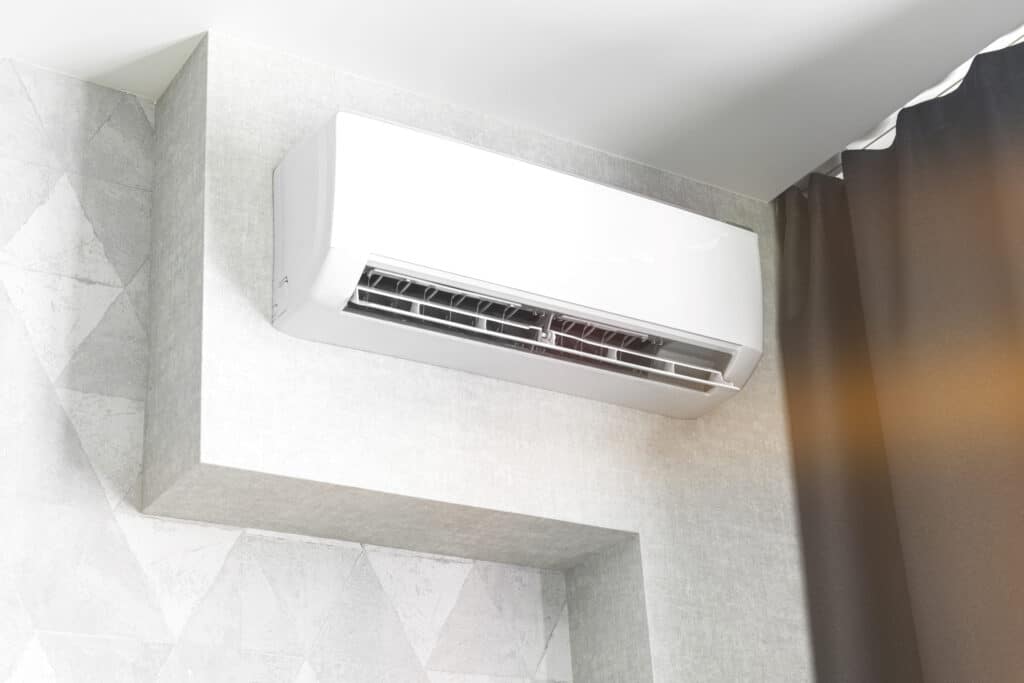
Ductless mini-splits are an excellent system to install in some Illinois homes, while other types of heating and cooling systems may be a better option depending on the home’s needs. Many different factors must be considered to determine whether a mini-split system is the right option for you.
Here, Comfort Zone Service covers the basics of ductless mini-splits and discusses the advantages and disadvantages of installing these systems in your home.
What Are Ductless Mini-Splits & How Do They Work?
A ductless mini-split, also known as a ductless HVAC system, is a heating and cooling system that operates without ducts. Instead, it has individual units in each room that are connected to an outdoor compressor by refrigerant tubing and electrical wiring.
Here’s how ductless mini-splits work:
- Warm air from the room blows over evaporator coils in the indoor unit, which are cooled with refrigerant.
- The refrigerant absorbs the heat and transfers it to the outdoor unit.
- The outdoor unit then sends cold air back to the room through the indoor unit.
The Benefits of Ductless Mini-Splits
Installing ductless mini-splits comes with several advantages, including:
- Energy efficiency: Unlike other climate-controlling appliances, mini-splits require very little energy. While they use some electricity, the amount they use is not close to that used by traditional air conditioners.
- Heats and cools: Mini-splits are an all-in-one product capable of producing both hot and cold air.
- Quiet operation: The components of a mini-split are significantly quieter than standard ACs or furnaces.
- Safe: Mini-splits don’t use gas and require small amounts of electricity, making them an extremely safe option.
- Ideal for problem areas: If you have an area in your home that’s difficult to cool or heat, mini-splits are the perfect solution. They supplement the current system to address problem areas.
The Disadvantages of Ductless Mini-Splits
While the pros outweigh the cons, there are still a few things to consider before installing a ductless mini-split in your home:
- Not great for extreme cold: Mini-splits sometimes struggle when the weather gets exceedingly cold, like below 20 degrees Fahrenheit.
- Sometimes-complex installation process: For mini-splits to run efficiently, they must be positioned in a way that allows them to easily take in air. If not positioned properly, they may require excess amounts of energy to operate. Luckily, Comfort Zone Service’s technicians are skilled in ductless mini-split installation.
Schedule a Ductless Mini-Split Installation
Are you still unsure if a ductless mini-split is the right fit for your home? The experts at Comfort Zone Service are happy to help you explore ductless mini-splits as an option for your heating and cooling. Since 1988, we’ve provided Illinois residents with superior heating and cooling installations, repairs, and maintenance.
Call Comfort Zone Service today for ductless mini-split services in the Chicago area or request an appointment online.




 One of the simplest yet often overlooked maintenance tasks for your AC is regular filter replacement. Clean filters improve indoor air quality by trapping dust, allergens, and pollutants and help your AC operate efficiently. Clogged filters restrict airflow, forcing the system to work harder, increasing energy consumption and potential strain on the components.
 Investing in a smart thermostat can revolutionize your AC system’s performance and energy efficiency. Smart thermostats provide advanced features such as programmable schedules, remote control accessibility, and energy-saving settings.
 The outdoor unit of your AC requires proper care and maintenance for optimal performance. Make sure the area around the outdoor unit is clean and free from debris, such as leaves, grass, or dirt.

 Ductless HVAC systems consist of two main components: an outdoor unit and one or more indoor units. The outdoor unit houses the compressor and condenser, while the indoor units are installed in the rooms or areas you wish to heat or cool. These units are connected by refrigerant lines that transfer heat or cool air directly.